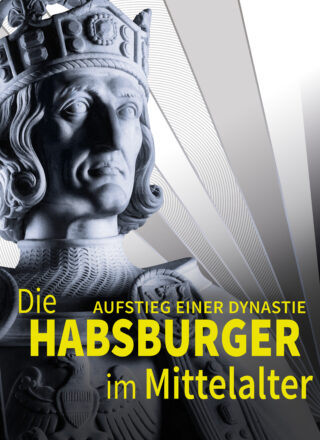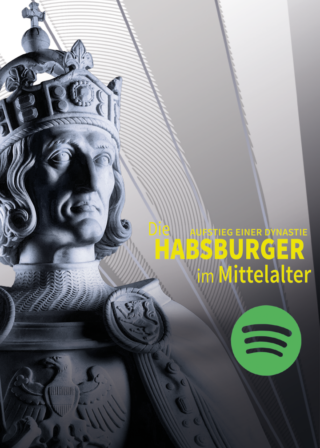




"The Habsburgs in the Middle Ages. The rise of a dynasty"
Historical Museum of the Palatinate Speyer
Domplatz
67346 Speyer
+49(0)6232 62 02 22
Access to the museum is signposted on all main roads in the vicinity of Speyer.
The nearest car park is Festplatz (navigation system: Festplatz/Geibstraße). From there it is only a few minutes' walk to the cathedral square/museum.
The Festplatz is occasionally used as an event site, so please check the current situation and possible car park alternatives, for example on the Speyer city website, before you arrive .
From Speyer main station/"Bahnhofsvorplatz" stop: Bus 561 to the "Domplatz/Speyer" stop.
The bus runs every 10 minutes during the week until 8 pm. At weekends, the 561 bus runs every 10 minutes until 6 pm.
From Mannheim: S3 direction Germersheim/Karlsruhe or S4 to Bruchsal.
From Karlsruhe: S3 direction Germersheim/Mannheim or the RE4 in Speyer.
You can access the timetable information for local public transport with the pre-set destination "Speyer, Domplatz"at here.
Parking: Domplatz, only about 50 metres from the museum.
Nextbike hire and return stations are located opposite Speyer's main railway station and on Domplatz.
Opening times:
Welcome! We are open today until 18:00.
The Historical Museum of the Palatinate Speyer is open for you at the following times:
Tue to Sun, public holidays* 10 am to 6 pm
Closed on Mondays
*On public holidays and during the autumn, Christmas, winter, carnival, Easter and Whitsun holidays in Rhineland-Palatinate and Baden-Württemberg, the museum is also open on Mondays from 10 am to 6 pm.
The Historical Museum of the Palatinate has been classified according to the criteria of the nationwide "Travelling for All" label and is entitled to carry the "Accessibility tested" award.
Access to the museum is signposted on all main roads in the vicinity of Speyer.
From Speyer main station/"Bahnhofsvorplatz" stop: Bus 561 to the "Domplatz/Speyer" stop.
The bus runs every 10 minutes during the week until 8 pm. At weekends, the 561 bus runs every 10 minutes until 6 pm.
Große Pfaffengasse (directly at the museum): three parking spaces for people with disabilities.
Alternative: Festplatz/Speyer (200 metres from the museum).
Please note: The Festplatz is a hard-sand area, which is usually easy to drive on, but depending on the weather can mean more difficult conditions for wheelchairs and pushchairs. In this case, the car parks in Große Pfaffengasse are preferable.
If you are standing in front of the museum, the stepless entrance is on the left-hand side of the museum building. Signs indicate the direction. There is a bell at the side entrance, our staff will be happy to open the door for you and accompany you to the museum ticket office and the exhibition rooms.
All exhibition rooms are accessible without steps. The exception is the last two rooms in the left wing of the wine museum, which cannot be remodelled due to the preservation order. We ask for your understanding.
Wheelchairs and folding chairs can be borrowed from us.
The WC for people with disabilities is located on the ground floor by the lockers.
Access with certified assistance dogs is permitted to all areas of the museum if they are appropriately labelled. Please bring appropriate identification with you.
People with disabilities whose disability pass shows the "B" or "H" mark may take an accompanying person with them free of charge.
Museum Director Alexander Schubert drew a positive balance: "People are still interested in culture after a three-year break due to the pandemic. The reluctance to visit major exhibitions that was still present in the winter months is increasingly giving way to enthusiasm to return to art and culture." This is evident from the fact that 200 of the 361 registered groups visited the exhibition within the last 5 weeks, in March and April. "The trend is going in the right direction, people are making their way back to the museum. That gives us hope for future projects," says Schubert.
The accompanying effects of the Habsburg exhibition were also consistently positive for Speyer. A large-scale shop window competition at the start of the exhibition involved the local business community in the major project. The state exhibition also prompted the permanent inclusion of Speyer Cathedral in the "Via Habsburg", a cultural route certified by the Council of Europe since 2014.
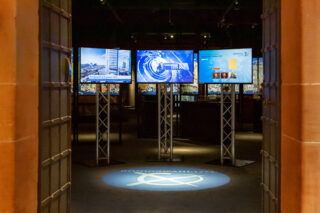
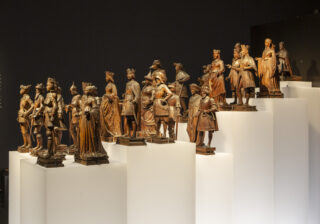
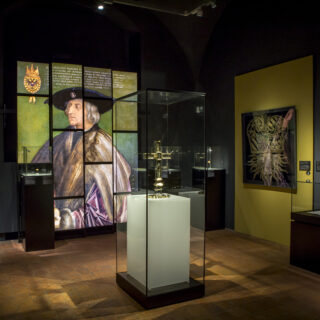
More than 200 high-calibre exhibits, including magnificent medieval manuscripts, valuable reliquaries and impressive Renaissance works of art, were on display in an impressive exhibition architecture. The unique loans, which were shown together in one exhibition for the first time, included the Tyrolean Archduke's hat, the "Golden Bull of Emperor Charles IV", which is part of the world's documentary heritage, figurative architectural elements from St Stephen's Cathedral in Vienna and Leopold III's chain mail from Lucerne. One of the most famous documents was the "Privilegium maius" from the Austrian State Archives in Vienna. From the Salzburg Museum, various components were on display that Maximilian I had commissioned for the never-completed monument in Speyer Cathedral. The surviving statues gave an impression of the monumentality of the intended work and were supplemented virtually in the exhibition. A multimedia guide, which visitors could download via the new museum app, offered various exciting audio tours.
The exhibition conceived at the Historical Museum of the Palatinate bore the honorary title "Rhineland-Palatinate State Exhibition" and was held under the patronage of the Minister President of Rhineland-Palatinate, Malu Dreyer, and the patronage of Charles of Habsburg-Lorraine. Prominent visitors to the Habsburg exhibition included science journalist and TV presenter Mai Thi Nguyen-Kim, former Minister President Bernhard Vogel and various members of the German and European aristocracy.
The richly illustrated catalogue complemented the visit to the exhibition with contributions from renowned academics. In addition to a series of lectures with medieval experts from Germany, Austria and Switzerland, the museum organised an XXL cinema evening for Empress Sisi fans with Romy Schneider and Karl-Heinz-Böhm in the title roles. A podcast series on the exhibition was produced for the first time: In dialogue with experts, the podcast "Hörgedeck" was dedicated to a wide variety of topics and aspects of life in Habsburg times.
The comedy spectacle by Bernhard Weller and Götz Valter entitled "Fluch, Fortüne und viele Flinten" (Curse, Fortune and Many Guns), produced especially for the state exhibition "The Habsburgs in the Middle Ages", was performed a total of four times to sold-out audiences in the museum's Forum. The theatre play was sponsored by the Rhineland-Palatinate Foundation for Culture.
Together with various partners from Speyer and the region, an extensive culinary programme was developed: for example, there was a "King Rudolf" beer brewed for the exhibition by Black Stork Braumanufaktur as well as Habsburg wine and sparkling wine from the Deidesheim winegrowers' association. The so-called "HabsBURGER" was created in cooperation with the Speyer meat boutique.
Historical Museum of the Palatinate Speyer
Cathedral Square
67346 Speyer
Tue to Sun, public holidays 10 am to 6 pm
Historical Museum of the Palatinate Speyer
Domplatz 4
67346 Speyer
Telephone 06232 62 02 22
info@museum.speyer.de
Opening hours
Tuesdays to Sundays 10 a.m. to 6 p.m.
Closed on Mondays
On public holidays and during the autumn, Christmas, winter, carnival, Easter and Whitsun holidays in Rhineland-Palatinate and Baden-Württemberg, the museum is also open on Mondays from 10 am to 6 pm.
The website is being revised in accordance with the WCAG (Web Content Accessibility Guidelines) and adapted for accessibility in line with EU standard EN 301 549.